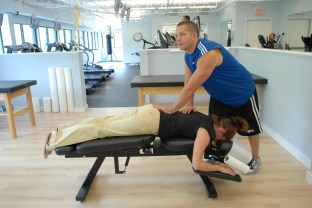
My background is in Athletic Training and Exercise Science. Athletic Training (ATC) is an Allied Healthcare profession. The majority of people I hear athletic trainer and confuse us with a strength coach, which I also happen to be. To clarify the distinction between an athletic trainer and a strength coach, I give you this scenario, when you see an injury on a football field (or any other sporting event for that matter) the person who runs out there to help the injured athlete is most likely an ATC. Typically, athletic trainers work in the professional or collegiate settings. I have taken that philosophy and treatment approach to another level. High level athletes do not have the luxury of missing 6 to 8 weeks for an injury unless absolutely necessary, so why should you? It is my job to provide aggressive therapy treatments to get you back ASAP. Early in my career many ATC’s tried to disassociate themselves from fitness. Since I came from a fitness background my viewpoint has always been that the two professions should go hand in hand. Wouldn’t it be a huge benefit to take an athlete right from injury to full participation without having to go from physical therapist to strength coach and all the in between? Also, I am able to use my fitness knowledge to modify or alter most workouts programs so you can maintain and even progress your fitness level even while injured.
Combining the fields of sports rehabilitation and fitness permeates throughout my program design. Knowledge in both fields has allowed me to develop a rehabilitation protocol that almost always has a fitness component. For instance when designing a knee rehab I may have the athlete shoulder press while standing on a balance board. To the lay person this looks like an upper body exercise. However standing on the disk incorporates core as well as knee joint stability for the lower extremity. The arm movement and changing planes of the upper body is also increasing the stress placed on the lower body. This philosophy can be implemented into any rehabilitation program. Doing exercises that are not just exclusively focused on the injury builds a sense of self-empowerment. Now we are being proactive, not just reactive and turning the whole experience more positive.
 Combining Fitness and Sports Medicine